How to get rid of belly fat for women: causes and what helps
Why women gain belly fat, especially around menopause, why deep visceral fat matters, how to measure your waist, and the food, exercise, and sleep habits that help.
On this page
- What is the major cause of belly fat in women?
- Visceral vs. subcutaneous fat: which belly fat matters most?
- What waist size raises health risks for women?
- How to lose belly fat for women: food and daily habits
- How to get rid of visceral belly fat with exercise
- Can you spot-reduce belly fat with crunches?
- How fast can you lose belly fat?
- When should you see a doctor about belly fat?
Research on how to get rid of belly fat for women points to the same steps that cut body fat overall. Eat a little less than you burn, do aerobic exercise and strength training each week, protect your sleep, and cut back on added sugar and alcohol. Ab exercises don’t burn extra belly fat. Regular exercise can still shrink the deep fat inside your belly, even when the scale barely moves, a 2024 review found.
Belly fat often grows around menopause, sometimes even when your weight stays the same. For more on each habit, see our belly fat guides.
What is the major cause of belly fat in women?
Like other body fat, belly fat builds up when you take in more calories than your body uses. Midlife makes that easier, and falling estrogen and other hormone changes of menopause shift more of the fat to your middle, a 2024 review in Current Obesity Reports explains.
Your resting metabolism slows with age, and after 30 you lose about 3 to 8% of your muscle mass each decade. If you eat and move the way you did at 30, weight can creep up.
Menopause and belly fat
Hormone changes after menopause can raise your risk of a large waistline, high blood sugar, and low HDL (“good”) cholesterol, according to the National Heart, Lung, and Blood Institute (NHLBI). In the Study of Women’s Health Across the Nation (SWAN), which included 3,064 midlife women, participants gained about 1.5 pounds (0.7 kg) a year, and their waists grew 0.9 inch (2.2 cm) over 3 years.
A systematic review (a careful summary of earlier studies) of 2,472 women tied weight gain mainly to aging. But menopause strongly predicted more fat around the middle, with waist size growing 1.82 inches (4.63 cm) as women went through it.
Sleep, stress, and alcohol
In the SWAN study, women with frequent hot flashes and night sweats went on to gain more weight and had larger waists. Sleep problems accounted for almost 30% of that effect on weight gain.
Regularly sleeping less than 7 hours a night can affect the hormones that control hunger, so you may overeat or miss your body’s signals that you’re full, the NHLBI explains. Stress makes your body release hormones such as cortisol, which can make you eat more and store more fat. Smoking and drinking a lot of alcohol raise your risk of metabolic syndrome, a condition for which weight is a major cause, the NHLBI says.
Visceral vs. subcutaneous fat: which belly fat matters most?
Visceral fat, the deep fat inside your abdomen, is the riskier kind. A review in Obesity Reviews found that it predicts the risk of death better than subcutaneous fat, the layer under your skin. Fat around the belly also carries a greater risk of diabetes and heart and blood vessel problems than fat on the hips and thighs.
| Subcutaneous fat | Visceral fat | |
|---|---|---|
| Where it sits | Under the skin | Inside the abdominal cavity |
| What it does with fat | Soaks up fatty acids and triglycerides from the blood | Releases more fatty acids and drains straight to the liver |
| Response to insulin | Less insulin-resistant | More insulin-resistant |
| Immune cells | Fewer | More inflammatory and immune cells |
Fat cells, especially in your abdomen, can raise your levels of chemicals called free fatty acids, the NHLBI explains. These can lead to insulin resistance, which means your body doesn’t respond well to insulin. Insulin is the hormone that controls how much sugar your muscles and organs take in from your blood.
Free fatty acids and insulin resistance can raise “bad” LDL cholesterol, lower “good” HDL cholesterol, and push up blood pressure and triglycerides (a type of fat in the blood). Immune cells can also make extra fat cells release chemicals that increase inflammation, and that inflammation can cause plaque to build up in your blood vessels.
What waist size raises health risks for women?
For women, a waist of more than 35 inches (about 89 cm) raises the risk of heart disease and type 2 diabetes, according to the NHLBI’s healthy weight guidance. The risk is higher when most of your fat sits around your waist rather than at your hips.
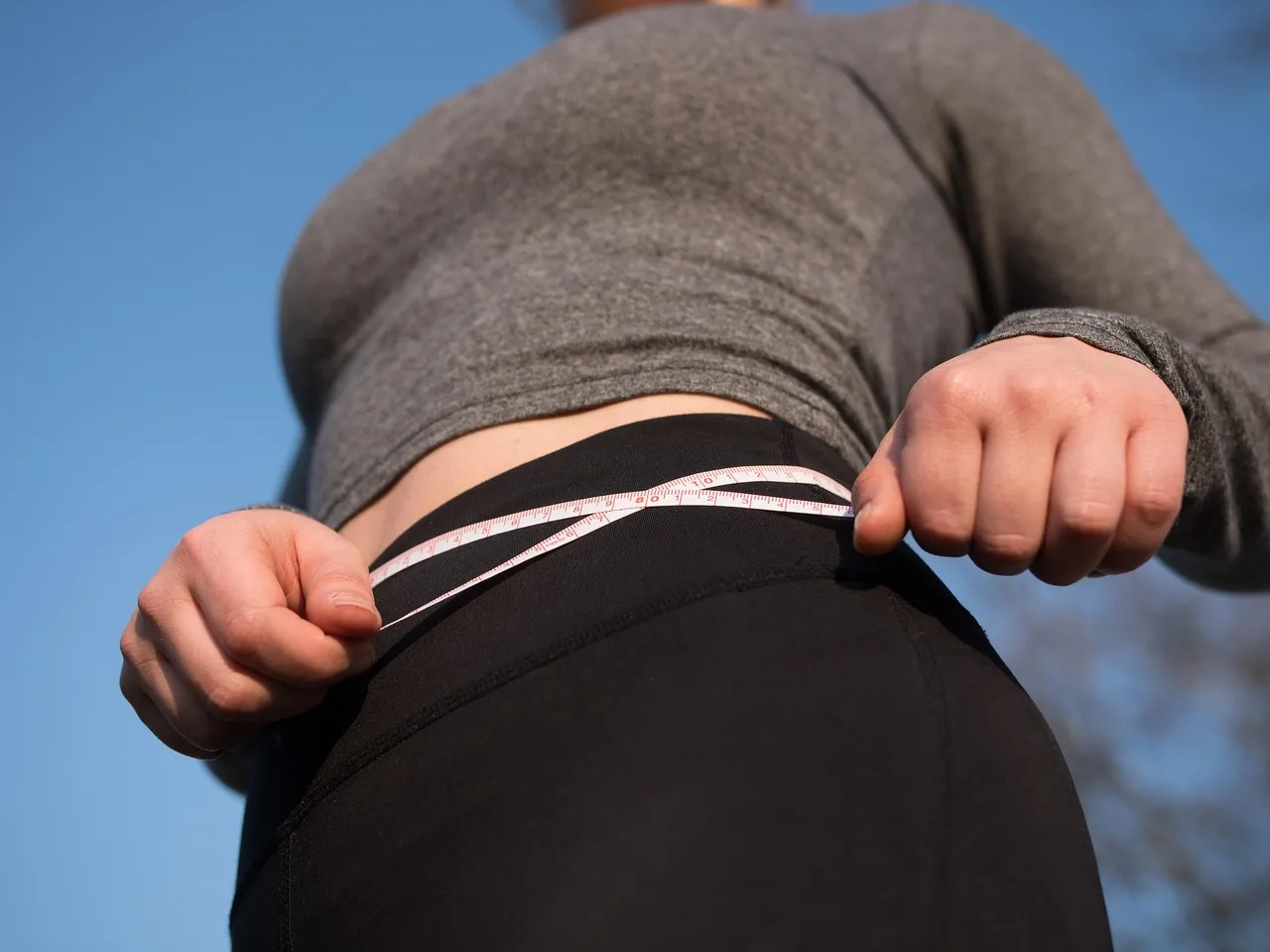
To measure your waist, stand and wrap a tape measure around your middle, just above your hipbones. Read the tape just after you breathe out.
Belly fat in overweight women
If you’re an overweight woman, belly fat is worth tracking along with your weight. A healthy BMI for adults is generally 18.5 to 24.9, says the NHLBI, and our BMI calculator works out yours from your height and weight. Because body fat shifts in midlife, the 2024 review suggests also tracking your waist-to-hip ratio (waist size divided by hip size). For women, a ratio of 0.85 or more is one marker of overweight or obesity.
How to lose belly fat for women: food and daily habits
To lose stomach fat, start with calories. Our calorie deficit calculator gives you a daily target for eating a little less than you burn. Then work on food quality:
- Eat more fiber. Low fiber intake in midlife is linked to a higher risk of weight gain.
- Keep added sugar under 10% of your daily calories, as the NHLBI advises.
- Limit alcohol.
- Get enough protein. In middle-aged women losing weight, at least 0.55 gram per pound of body weight (1.2 grams per kilogram) improved the mix of fat and muscle.
- Pick a heart-healthy eating pattern you can stick with.
Keep regular sleep hours, too, and aim for at least 7 hours a night. Pick one way to ease stress that fits your day, such as a short walk after dinner.
How to get rid of visceral belly fat with exercise
Exercise has a modest effect on weight, a 2024 review found, but it reduces visceral fat and protects against muscle loss as women go through menopause. A meta-analysis (a study that pools earlier studies) of 101 studies with 5,697 women past menopause found that exercise training reduced fat mass, waist size, and visceral fat. Aerobic and combined training did more for fat, while strength and combined training did more for muscle, so the authors suggest doing both.
The NHLBI says most adults need at least 150 minutes of aerobic activity a week, which works out to 30 minutes on 5 days. Add muscle-strengthening work for your major muscle groups on 2 or more days.
Only 7.2% of SWAN women consistently met the activity guideline through midlife. If you’re not there yet, start small and build up. Our guide to the best exercises for belly fat has workouts to try.
Can you spot-reduce belly fat with crunches?
No. In a randomized controlled trial (a study that assigns people to groups by chance), 40 overweight and obese women were split into two groups: one only dieted, and the other dieted and did 12 weeks of abdominal resistance training (ab exercises). Both groups lost weight, belly fat, and inches from the waist, and the ab workouts added no significant extra loss.
How fast can you lose belly fat?
Plan on months. Health professionals recommend losing 5% to 10% of your starting weight over about 6 months, the NHLBI says. For a 180-pound woman, that’s 9 to 18 pounds.
Even a loss of 3% to 5% of your weight can lower triglycerides, blood sugar, and your risk of type 2 diabetes, the NHLBI adds. Measure your waist once a month at the same spot. Exercise reduces visceral fat more than it changes your weight, so the tape may show progress the scale misses.
When should you see a doctor about belly fat?
If your BMI is 25 or higher or your waist-to-hip ratio is 0.85 or more, use each checkup to talk about weight management, a 2024 review on midlife women suggests. The NHLBI also advises routine visits to keep track of your cholesterol, triglycerides, blood pressure, and blood sugar. Bring your waist measurement and a week of notes on your sleep, meals, and activity to each visit.
Mention hot flashes or night sweats that disturb your sleep. Hormone therapy for these symptoms can improve sleep and activity, the review says, but doctors shouldn’t prescribe it to reduce body fat. If you gained weight after starting a new medicine, ask about that as well, because some medicines cause weight gain. When lifestyle changes alone don’t work, your doctor may also discuss prescription weight loss medicines or weight loss surgery.
This guide is general information, not medical advice. Talk to your doctor before you change your diet, your exercise, or your medicines. Read how we write and check our guides in our editorial policy.
Sources
- Aim for a Healthy Weight, NHLBI, National Institutes of Health
- Overweight and Obesity: Causes and Risk Factors, NHLBI, National Institutes of Health
- Metabolic Syndrome: Causes and Risk Factors, NHLBI, National Institutes of Health
- Weight Gain in Midlife Women, Current Obesity Reports (2024), via PubMed Central (National Library of Medicine)
- The effects of exercise training on body composition in postmenopausal women: a systematic review and meta-analysis, Frontiers in Endocrinology (2023), via PubMed Central (National Library of Medicine)
- Subcutaneous and visceral adipose tissue: structural and functional differences, Obesity Reviews (2010), abstract on PubMed, National Library of Medicine
- Effect of abdominal resistance exercise on abdominal subcutaneous fat of obese women: a randomized controlled trial using ultrasound imaging assessments, Journal of Manipulative and Physiological Therapeutics (2015), abstract on PubMed, National Library of Medicine